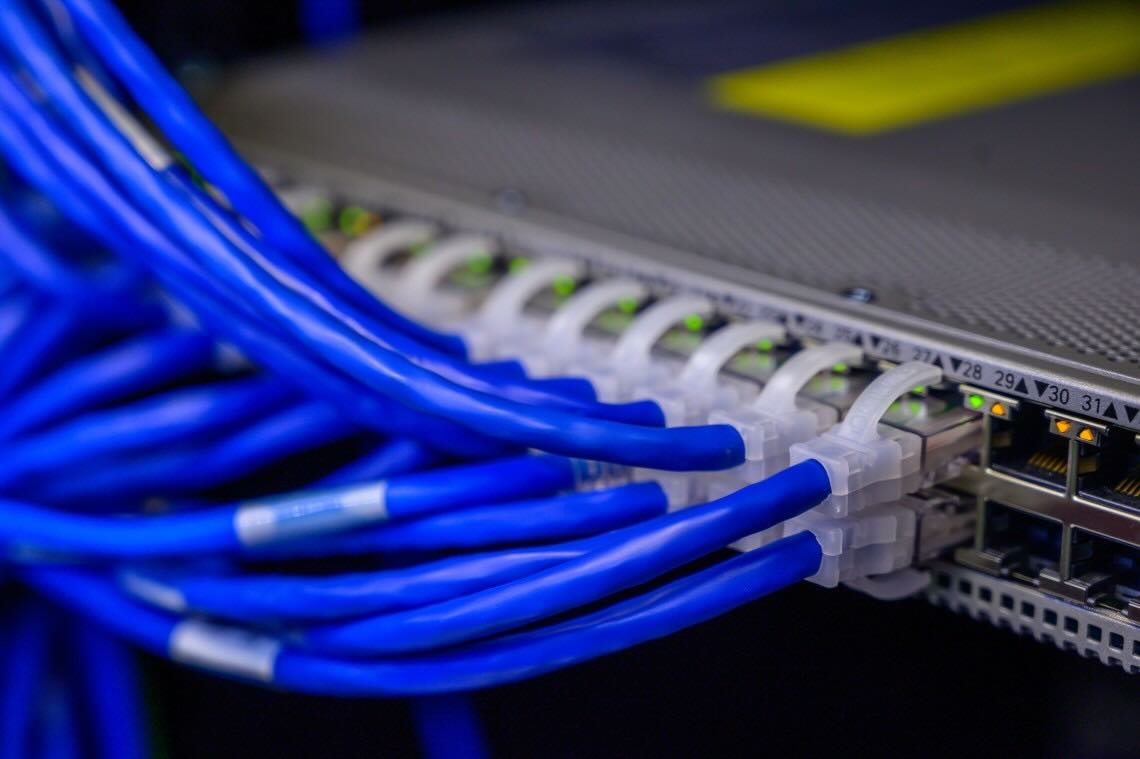
I remember sitting in an internet cafe for hours, watching a progress bar crawl one percent at a time, just to get a pirated copy of Need for Speed or GTA onto a disc. The cafe guy would shout when your time was running out, and you'd watch the percentage instead of breathing, praying it hit 100 before the clock did. In 2011 I cried — actually cried — to get internet at home. Back then the internet felt like a library I'd broken into after hours. Every link was a door I hadn't opened yet, and nobody was holding my hand through it.
Fifteen years later I have internet everywhere, on every device, all the time, and somehow I explore less than I did with a dial-up cafe timer running out. That's not nostalgia talking. That's the actual shape of what changed.
The internet didn't get worse. It got personalized. Somewhere along the way, somebody convinced us that being watched all the time and being known are the same thing. They aren't.
Algorithm or You: Who's the Master?
Are you the master of your own mind, or is the algorithm? Every day the answer gets less obvious. What you watch, what you buy, who you follow, what you believe — somewhere underneath all of it, a step-by-step set of instructions decided it for you before you did.
An algorithm, at its core, is just that: a step-by-step set of instructions to solve a problem. Find the shortest path between two points. Spot a pattern in a disease. Sort a library by subject. Nothing sinister in any of that. But the same logic that finds you the shortest route also profiles you, predicts you, and feeds you — and somewhere in that shift, the algorithm stopped solving problems for you and started solving you.
The old internet was something you went out into. You followed one link to another, one forum's recommendation to a different forum, and you came back with something you didn't go looking for. That was the whole game — exploration, accident, the slow accumulation of a perspective that wasn't handed to you. Today the internet comes to you instead, pre-sorted, pre-tasted, built entirely around what you already like. Nothing in the feed is there to surprise you. It's there to keep you.
That's the real shift: the internet stopped treating you like a person exploring a place and started treating you like a customer to be retained. The old internet was a library. You wandered the stacks, and what you found, you found because you went looking. The internet now is a shopping mall — every aisle engineered, every recommendation paid for by someone, every second of your attention logged and resold. You didn't walk into a library. You walked onto a sales floor, and you are not the shopper. You're the product on the shelf.
There's a version of curiosity that's easy to miss because it doesn't look like curiosity anymore. Following a stranger's forum post into a topic you knew nothing about. Reading a blog by someone with a completely different life than yours and walking away thinking differently. That wasn't a side effect of the old internet — that was the internet working. Curiosity was the algorithm. You ran it yourself, one link at a time, and what you got back was somebody else's mind, not your own taste reflected back at you.
What we have now is a highway where a map used to be. A map makes you choose the route. A highway just moves you, fast, in one direction, and calls that progress. You arrive somewhere, but you didn't decide where, and you definitely didn't discover it.
And that's the actual cost — not wasted time, not even privacy. It's that you stop running into people who think differently than you. No new perspective, no friction, no version of the world that isn't already shaped like your own. Scrolling feels like motion. It isn't. Watching time pass on a feed is not the same as learning how someone else sees the world, and the algorithm has no incentive to ever let you find out.
This is what Edward Snowden was actually warning about in Permanent Record, and most people miss the point because they're answering the wrong question. The common defense is “I have nothing to hide.” Snowden's argument was never about hiding things. It was about whether you can think freely, try something and fail at it privately, change your mind about who you are — without every version of you along the way getting logged forever. Every search remembered. Every pause turned into a data point. The old internet let you disappear into it. This one remembers everything, on purpose, because remembering is the business model.
Algorithms vs. Discovery
Ask someone under thirty what “the internet” means to them, and most won't say forums, blogs, or search. They'll say Instagram. YouTube. Netflix. TikTok. The internet didn't just get personalized — it got smaller. What used to be an entire open space, millions of strange little corners you could wander into, collapsed into four or five apps that decided among themselves to split up your attention. That's not the internet shrinking by accident. That's the internet being replaced by a handful of feeds wearing its name.
And on those feeds, we've gotten careless in a way we'd never accept anywhere else. We're careful about what we put in our bodies. Most people read a label, check a menu, ask what's in something before they eat it. Nobody walks into a restaurant and says “just bring me whatever, I don't care.” But that's exactly what we do with content. We open Netflix, open YouTube, open the For You page, and let an algorithm decide what goes into our heads with less scrutiny than we'd give a sandwich.
Food builds the body. Content builds the brain. We treat one like it matters and the other like it's just noise to pass the time.
And it shows. Instagram started as a photo app. Now it's a video feed wearing a photo app's name. Nobody reads anymore if they can watch instead — text feels like work, video feels like rest, even when the video says less than the text would have. Every streaming platform is flooded with new shows, and somehow they all look identical: same color grade, same pacing, same three-act structure built to keep you from clicking away, because the algorithm rewards retention, not originality. AI tools made producing this stuff nearly free, so the flood isn't slowing down. It's just getting smoother and more interchangeable.
Here's the actual test I use: of everything you watched this week, how much of it would you bring up in conversation tomorrow? Not “did you see that,” just passing reference — how much of it actually gave you something to think about, argue about, feel something about? For most people, the honest answer is almost none of it. We're not short on content. We're short on anything worth remembering.
This is the same trade the rest of the internet already made, just easier to see in video form because the before-and-after is so stark. We used to find a film the way we used to find anything online: somebody mentioned it, a blog recommended it, a forum argued about it for forty replies, and you went looking. Now the app just puts it in front of you and calls that discovery. It isn't. You didn't find it. It found you, because finding you is the entire business.
Scorsese pointed at the same gap from inside the film industry — he noticed that the word “content” used to mean something specific to people who took film seriously, and now it's a catch-all that puts a Fellini picture and a cat video on the same shelf, judged the same way, by the same metric. He called curation an act of generosity — someone sharing what moved them, hoping it moves you too. An algorithm doesn't share anything. It calculates what kept you watching last time and assumes that's all you want forever.
I notice this on my own feeds constantly. The algorithm has never once recommended me something it didn't already know I'd like. That's not a feature. A friend who only ever recommends things you already like isn't a good friend — they're just agreeing with you. Real recommendations come with risk. The algorithm doesn't take risks. It plays the odds.
Ethan Hawke said something in passing that's stuck with me more than the rest of his talk: that creativity, real engagement with anything, requires being willing to feel foolish — trying the thing you wouldn't normally try, listening to what you wouldn't normally listen to. A feed is built to make sure that never happens. Feeling foolish means risking a bad click, and a bad click is the one thing the algorithm is optimized to prevent.
We didn't run out of things to watch. We ran out of an internet big enough to make us feel foolish in the first place.
The Internet Stops Being a Place
Search engines used to answer your questions. Algorithms learned to predict the question before you finished typing it. Now the answer just appears, generated, no links, nothing to click through. And quietly, somewhere past all of that, something else has started happening. The agent doesn't just answer anymore. It goes.
Book the flight. Compare the prices. Fill the form. Pay the bill. You say what you want, and a piece of software walks the internet on your behalf so you never have to.
I keep wondering what exactly we're saving. Time, obviously. But time for what? When I look something up myself, I get distracted by the wrong thing on the way to the right thing, and sometimes the wrong thing turns out to matter more. An agent doesn't get distracted. It doesn't notice a strange site design, doesn't get annoyed by a price, doesn't end up somewhere it didn't plan to be. It just finishes the task and comes back. Is that better, or is that just faster?
There's a version of the future, already arriving, where the internet isn't a place anymore at all. Not a library, not even a mall. Just a layer underneath, doing things, invisible to the person it's doing them for. You'll get the outcome. You won't have the experience of getting it. And maybe that's fine for booking a dentist appointment. But if this is how we relate to everything now — outcome without experience, result without the wandering that used to get you there — what exactly is left of the part that used to be yours?
I don't think anyone's answered that yet. I'm not sure the people building it are even asking.
What We Actually Lost
I still think about that internet cafe sometimes. The progress bar. The clock running out before the download finished. I didn't know it then, but I was getting something in that wait that I don't get anymore even with everything finishing instantly: the sense that I'd gone and found something, not that something had been placed in front of me.
The internet was built by people putting things into it — forums, blogs, half-finished websites, arguments in comment sections nobody important was watching. Somewhere along the way it stopped being something we made together and became something used on us. First they wanted the data. Now they want the decision itself — what you watch, what you buy, who you become, and increasingly, agents that don't even ask you anymore, just go and do it.
None of this makes you a worse person for using it. I use it. I'm using it right now, writing this. The point was never to log off and disappear. The point is noticing what got quietly removed from the deal: the wandering, the accident, the friction of running into a person or an idea you didn't ask for and weren't ready for. That's gone, and it didn't announce itself on the way out.
Maybe the next internet won't even look like one. Maybe it'll just be a layer underneath everything, invisible, doing things for you while you do something else entirely. If that's where this goes, I hope we at least notice what we traded for it before we forget we ever had a choice.
I cried for the internet once. I don't think I'd cry for this version of it. That's not nostalgia. That's just the honest difference between something you went looking for and something that was simply, quietly, given to you.
References & Further Reading
Edward Snowden, Permanent Record (2019)
The memoir anchoring the privacy section — Snowden's argument that privacy isn't about having something to hide, but about preserving the ability to think, fail, and change your mind without it being permanently recorded.
Martin Scorsese, “Il Maestro: Federico Fellini and the Lost Magic of Cinema” — Harper's Magazine, March 2021 (harpers.org/archive/2021/03/il-maestro-federico-fellini-martin-scorsese)
Scorsese's essay on Fellini, cinema, and how the word “content” flattened film into one undifferentiated category — and why curation is an act of generosity that algorithms can't replicate.
Ethan Hawke, “Give Yourself Permission to Be Creative” — TED Talk, 2020 (ted.com/talks/ethan_hawke_give_yourself_permission_to_be_creative)
Hawke's talk on creativity as sustenance rather than luxury, and the willingness to feel foolish as the price of real engagement.
HUMAN Security, 2026 State of AI Traffic report (via WorkOS, workos.com/blog/ai-agent-web-traffic-what-developers-need-to-change)
Source for AI agent traffic growing roughly 7,851% year over year — about eight times faster than human browsing growth.
“The Agentic Browser Landscape in 2026” — No Hacks (nohacks.co/blog/agentic-browser-landscape-2026)
Source for Chrome's auto-browse rollout, expanding to an estimated 200 million Android devices by end of 2026.
“The Agentic Web: How People (and AI Agents) Will Use Websites Next” — imFORZA (imforza.com/blog/agentic-web)
Source for agents reading, paying, and booking on a user's behalf without a human visiting the site directly.
Comments
No comments yet. Be the first to share your thoughts.